Tuesday, October 05, 2010

The Course of One's Life

I ambitiously asked my students to read and respond to a couple of the sections in Rush Rhees' Moral Questions where he discusses the differences between human life and animal life, and stresses the ways in which concepts that are essential to talking about the meaning and shape of human life generally get no traction if we try to apply them to animal lives. (I discuss this in my paper on Rhees.) In general he tries to make this distinction through several examples where the attempt to transfer concepts of "human life" to animal lives doesn't work:
"'He was faced with a difficult choice.' That is something you never would say of an animal. Neither would you say that the animal showed weakness or strength in making a choice." (p. 167)

"We might say that an animal's life does not go one way rather than another. It just goes on." (p. 168)

"An otter cannot lead one kind of life rather than another." (p. 169)

"...one could not talk about the cat as having its life to live in the sense in which you can speak of achievement or failure. You could not speak of the cat as having made a mess of its life, and so forth." (p 183)
I understand the general sort of distinction that Rhees is trying to make. But then in class, we found some interesting specific cases in which one might put pressure on this. I initially thought that the remark about the cat--and that we cannot say that it made a mess of its life--was perhaps the clearest example of the distinction he wants to make. But then I thought of cases where an animal--I think gorillas do this--might try to usurp "silverback" status too soon. That, in this sense, the gorilla made a miscalculation, and was, say, severely beaten down and ostracized. Could we say, "He tried to soon, and has made a mess of his life"?

I don't think that's obviously nonsense, but I have a harder time imagining that in the case of the cat. I would also want to know more about gorillas. And even though Rhees sometimes uses absolute language ("cannot say"), maybe it doesn't count against the spirit of his remarks that in certain, specific, and perhaps exceptional cases, we find that we can extend certain of these concepts to some aspects of some animal lives. At any rate, such extensions have to be earned in a way that we don't have to earn them when talking about human lives. Indeed, they are an integral part of we think of our lives as have a potential course, such that they can go one way rather than another, can turn out well or become a wreck.

And perhaps that we can, with caution and attention, extend some of these concepts to some animals helps makes sense of Rhees' advice to M. O'C Drury to look on animals as companions (or adversaries, etc.) rather than as experimental subjects (in psychology). That is, just as we learn what human life is amongst human companions--rather than in a laboratory--the same will be true of animals and animal life.

Monday, October 04, 2010

Tigers Are Not Vicious

So, I led a little discussion about McMahan's notorious article about the desirability of the controlled extinction (or genetic modification) of carnivores last Friday. One of the more interesting suggestions--that I've seen bandied about elsewhere--was the possibility of genetically engineering herbivores with a strong desire to be eaten, and who took pleasure in their own being eaten. That would solve the hedonic problem just about as well. So, sci-fi is a double-edged sword. Touché. Some people from the student newspaper were there, so we'll see whether they can misquote my impassioned claim that I don't give a rat's ass about the precise theory of value at work, so long as a certain psychologist in the room would grant me that some things have aesthetic value.

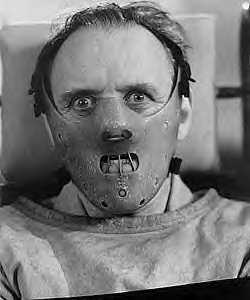
Which brings me to the title of this post. This psychologist at one point described the predatory acts of a tiger (or some other carnivore) as "vicious." I questioned whether it made sense to describe a tiger as vicious in, say, the way we would describe Ted Bundy as vicious. As soon as I said that, I knew this wouldn't work with a psychologist (of a certain sort). And the point fell apart. But Tigers aren't vicious in the way Ted Bundy--or the good-looking maniac to the left--was. This has nothing to do with whether Bundy believed that he was vicious. The point is that Bundy is a person, and persons can be vicious. They can also act in soulless, and savage ways (just to throw a couple similar ideas out there). But Tigers aren't savages. They are tigers. It does not make obvious sense to take a term of human evaluation and then apply it to the life of a tiger.

I suppose a hard determinist might say that if there's any sense to be made of the concept "vicious," it can't be a matter of human choice, because on their view, the human will is just as determined by nature as the tiger's will (if a tiger has a will). Here, I might just grant that for the sake of discussion, but point out that nevertheless, the way we talk about human lives as having this shape or that, this character or some other, involve a range of concepts which, as soon as we start applying them to animals, will tend to look anthropomorphic. Now, I agree with thinkers like Vicki Hearne who point out that some of our categories of character and evaluation can be applied to some human-animal relationships. So, it's not that I'm charging that psychologist with anthropomorphism. Rather, I'm charging him with being uncritically anthropomorphic. Does the tiger desire the suffering of its prey? Does it relish it? If it doesn't do those things, I'm not quite ready to call it vicious, or to pretend as if tigers are vicious in just the same way a human serial killer is.

I would also suggest that the way in which a tiger needs prey is different from the way in which Ted needed prey. But that's a different story, and I'm not in the mood to justify today, only to mark out differences. You get the idea.